

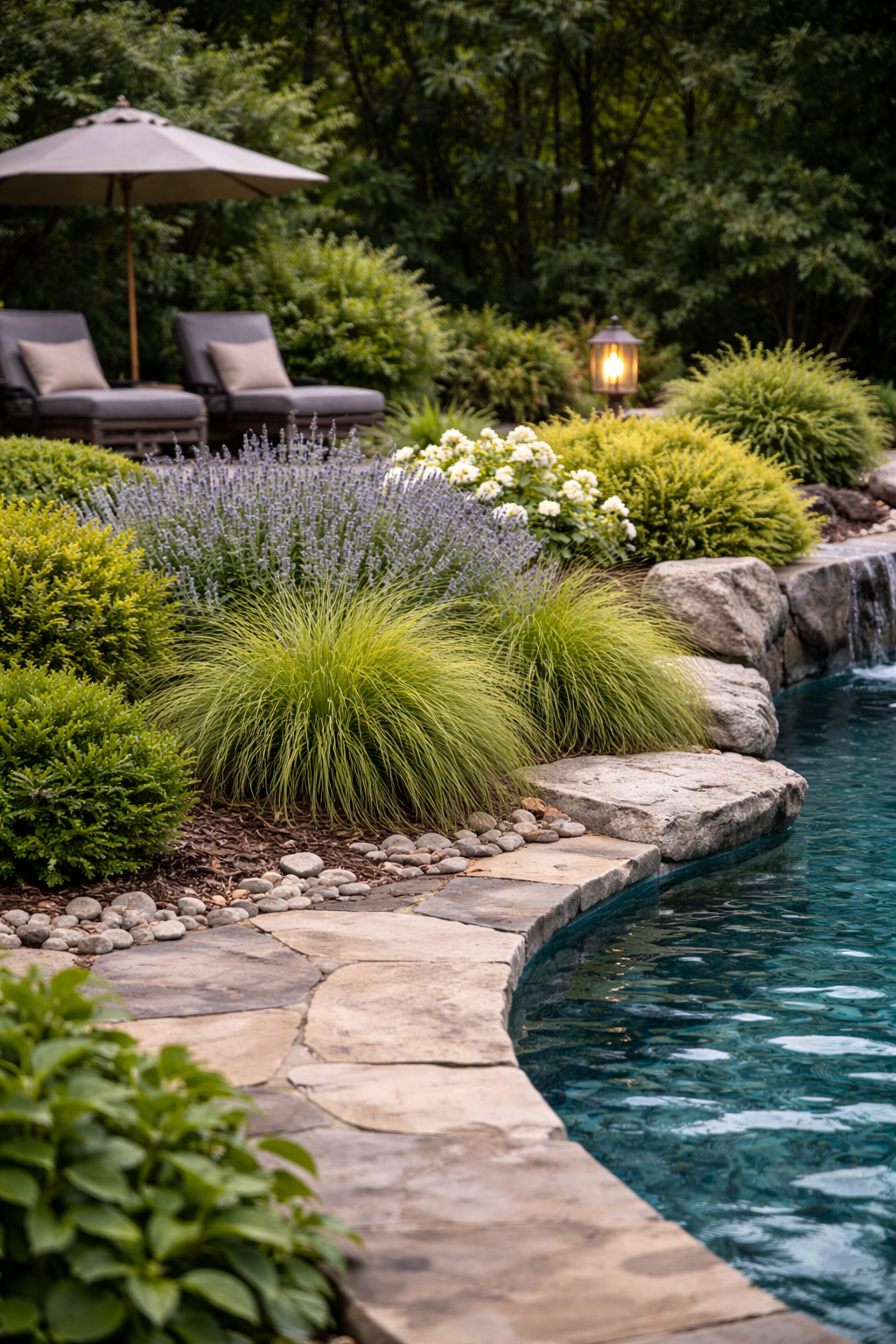
There’s something special about a poolside yard that feels finished, like it’s not just a pool, but a whole outdoor “room” where your family naturally gathers. The best pool landscapes do a few things at once: they soften hardscape, create privacy, add color and texture, and still stay practical when towels are dripping, kids are running through sprinklers, and the sun is doing its best to bake everything.
Poolside conditions can be tough on plants. You’re dealing with intense heat, reflected light off water and pavers, wind, and occasional splashes of chlorinated or salt water. The good news? Plenty of plants actually thrive in these conditions, if you choose wisely and place them with intention.
Below are our go-to poolside plant options (and how we like to use them) so your outdoor space stays beautiful, functional, and ready for memory-making.
What Makes Poolside Conditions Different (and Why It Matters)
Pool areas are their own microclimate. Even if the rest of your yard is thriving, a pool deck can be hotter, brighter, and drier than you’d expect, especially near light-colored concrete or stone.
When we plan pool landscaping at Aqua 4 Outdoor, we look at a handful of “real life” factors that homeowners feel every day:
- Heat + reflected sun: Pavers and water bounce light back onto leaves, which can scorch delicate plants.
- Water splash: Chlorine or salt spray can cause leaf burn for sensitive varieties.
- Wind exposure: Open pool areas often get more wind, which dries soil quickly.
- Mess factor: Some plants shed leaves, needles, berries, or flowers, right into the pool.
- Safety and flow: Spiky plants and thorny shrubs don’t belong along the path kids use to cannonball in.
The goal is to choose plants that can take the conditions and support the way you want to live outside, hosting friends, relaxing after work, or watching the kids play without constantly skimming debris.
What to Look For in a “Pool-Friendly” Plant
You don’t need a yard full of “indestructible” plants, you just need the right plant in the right place. Here are the traits we prioritize when selecting poolside landscaping:
1) Heat and sun tolerance
Full sun around a pool can feel like full sun on steroids. Choose plants labeled for full sun and heat tolerance, especially for areas right next to the deck.
2) Low litter (low mess)
Look for plants that don’t constantly drop petals, seed pods, or tiny leaves. A little seasonal shedding is normal, but you don’t want the pool filter doing overtime.
3) Root behavior that plays nicely
Avoid aggressive surface roots near decking and plumbing zones. Many shrubs and perennials are perfectly fine; the key is not planting large, invasive-rooted trees right beside the pool.
4) Soft textures where people walk and play
Pool areas are barefoot zones. Favor soft, touchable foliage along walkways and lounging areas, and save anything sharp for out-of-the-way accent pockets (or skip it altogether).
5) Similar water needs grouped together
Poolside planting looks best when it’s lush and consistent. Group plants with similar watering needs so irrigation is simple and everything stays healthy without constant adjustments.
Our Favorite Poolside Plants That Thrive
Below are plant categories we love for poolscapes, along with examples and where they shine. Think of these as a “menu” you can mix and match for your specific style: modern, tropical, Mediterranean, desert-inspired, or classic and green.
Architectural evergreens (structure without the mess)
Evergreens give a pool area that resort feeling, clean lines, year-round color, and a sense of privacy. They’re especially helpful for making the pool feel like a destination, not an afterthought.
Great options to consider: boxwood, podocarpus, privet (non-invasive varieties), clumping bamboo (the clumping type, not running), and certain upright junipers in dry climates.
How we use them: as a hedge for privacy behind lounge chairs, as a living backdrop for lighting, or to frame the ends of a pool and make the space feel more “designed.”
Tip: Keep hedges set back far enough that pruning doesn’t drop clippings into the water. A little breathing room makes maintenance feel easy.
Ornamental grasses (movement, softness, and modern style)
Grasses are a poolside favorite because they sway beautifully in the breeze and bring that relaxed, natural feel that pairs so well with water. Many are heat tolerant and surprisingly tough.
Great options to consider: fountain grass (choose non-invasive varieties for your region), muhly grass (especially for color in fall), blue fescue (cool-toned mounds), and feather reed grass (upright and tidy).
How we use them: in repeated groupings along the pool fence line, at the corners of patios, or as a soft border that transitions from deck to garden.
Poolside placement note: Some grasses shed seed heads. Place them a few feet away from the water’s edge so anything that drops stays in the bed, not in the pool.
Tropical-look plants (lush, vacation vibes)
If your dream is to step outside and feel like you’re on vacation, tropical and tropical-looking plants do that instantly. Even in climates that aren’t truly tropical, you can often get the look with hardy substitutes.
Great options to consider: bird of paradise (where climate allows), hardy banana (in warmer zones), canna lilies (bold leaves and flowers), elephant ear (in protected areas), and palms suited to your region.
How we use them: to create a “destination corner” by the shallow end, around an outdoor shower, or near a pergola where the big leaves feel immersive.
Tip: Keep large-leaf plants out of high-wind zones if possible. Torn leaves can look ragged quickly, so they do best with a little protection from a wall, fence, or hedge.
Flowering shrubs (color without constant cleanup)
Flowering shrubs can bring color and life without feeling fussy, especially when you choose varieties with a tidy growth habit and minimal litter. The goal is cheerful blooms, not daily sweeping.
Great options to consider: dwarf hydrangeas (in the right sun exposure), abelia, dwarf oleander (note: not ideal for homes with curious pets or kids who might chew plants), hibiscus (tropical varieties where they thrive), and lantana (excellent heat tolerance in many regions).
How we use them: as mid-height layers behind grasses and perennials, or to add bursts of color near seating areas, where you’ll actually enjoy the blooms up close.
Design tip: Choose one main bloom color and repeat it in a few places (instead of using every color). Your pool area will instantly feel calmer and more intentional.
Perennials and groundcovers (low, lovely, and practical)
Groundcovers and perennials are the quiet heroes of poolside landscaping. They fill in edges, soften hard lines, and reduce bare soil, meaning fewer weeds and less splashback of dirt onto your deck.
Great options to consider: liriope, society garlic, daylilies, salvia (many varieties), rosemary (upright or trailing), sedum/stonecrop (great for hot, dry edges), and creeping thyme (best in lighter-traffic spots).
How we use them: along the outside of coping (set back), in planting pockets between lounging zones, and as a “carpet” under taller shrubs.
Tip: If you love fragrance, tuck rosemary or thyme near the edge of a path. When people brush past, you get that subtle spa-like scent.
Succulents and drought-tolerant accents (clean, sculptural, low water)
For modern, desert, or Mediterranean-inspired poolscapes, succulents bring that sculptural look that pairs beautifully with stone and concrete. Many thrive in heat and don’t mind reflected sun.
Great options to consider: agave (choose softer varieties and place carefully), aloe, echeveria, senecio (blue chalk sticks), and hardy yucca varieties (again, watch sharp tips near walkways).
How we use them: in gravel mulch beds, in clustered groupings for a curated look, or as repeating accents that echo the lines of the pool.
Safety tip: Keep any plant with spines or sharp points away from pool entries, stairs, and the natural “run path” kids take. We love these plants, just not where bare feet land.
Trees near pools: a careful “yes” (with smart choices)
Trees can be incredible around pools. They provide shade, privacy, and that established, backyard-oasis feel. But they’re also the biggest source of pool debris if you pick the wrong one.
What we look for in poolside trees: minimal leaf drop, non-invasive roots, and a canopy that provides shade without constant shedding.
Examples that often work well (depending on region): certain ornamental olives (fruitless varieties), citrus (where climate allows, some litter), crepe myrtle (beautiful but can drop blooms), and smaller evergreen trees suited to your local conditions.
Placement tip: Instead of planting a tree right next to the water, place it to shade the lounging area or a seating nook. You get comfort where you want it most, while keeping the pool cleaner.
Practical Plant Placement: Where Each Type Works Best
Even the toughest plants can struggle if they’re in the wrong spot. Here’s a simple way to think about placement so the whole pool area functions smoothly.
Near the water’s edge
Choose low-litter, non-spiky plants with tidy growth. Think groundcovers, compact shrubs, and clean-lined grasses set back a bit from the coping.
Along the fence line or property edge
This is your privacy zone. Taller shrubs, hedges, and clumping plants shine here, plus it’s easier to keep maintenance mess away from the pool.
By seating and outdoor dining
Go for plants that feel welcoming up close: soft textures, fragrance, and gentle movement. This is where a “garden moment” matters, because this is where conversations happen.
At pool entries and paths
Prioritize safety and clear walkways. Keep anything scratchy, thorny, or sprawling away from these zones. Your future self (and your guests) will thank you.
Simple Steps to Plan Your Poolside Planting Like a Designer
If you’re standing in your yard wondering where to begin, this is the approach we recommend. It keeps the process manageable and helps you end up with a space that feels pulled together.
Step 1: Start with how you want to use the space
Do you want a sunny tanning ledge vibe? A shaded lounge zone? A family-friendly yard with room to play? When function leads, the design feels natural, and the space gets used more.
Step 2: Choose a “backdrop” and a “feature”
Pick one main evergreen or hedge style as your backdrop, then choose one feature look, like tropical leaves, modern succulents, or flowering color.
Example: A clean podocarpus hedge (backdrop) + repeating clumps of muhly grass (feature) creates a modern resort look without feeling busy.
Step 3: Layer heights for that lush, finished feel
A designer trick that works every time: layer tall (privacy), medium (structure), and low (edge softening). This creates depth and makes the pool feel nestled into the landscape.
Step 4: Repeat a few plants instead of collecting many
Repeating the same 3–6 plant types usually looks more high-end than using 15 different varieties. It also simplifies maintenance and keeps your outdoor space calm and cohesive.
Step 5: Plan for lighting and nighttime ambiance
Pool landscapes are magical after sunset. Leave space for low-voltage lighting, and choose plants that look great when uplit, grasses, palms, and architectural shrubs are especially stunning at night.
Maintenance Tips to Keep Poolside Landscaping Looking Effortless
We’re big believers that a beautiful outdoor space should feel joyful, not like another chore. A few smart habits go a long way.
Mulch matters (and not just for looks)
Mulch helps soil hold moisture and keeps plants from struggling in the heat. Near pools, we often like clean, tidy mulch styles (or decorative gravel in the right design) to reduce splash and keep the look crisp.
Use drip irrigation where possible
Drip irrigation keeps water where plants need it, at the roots, without overspray onto decks. It also helps avoid mineral spotting on hardscape and makes watering feel automatic.
Prune lightly and consistently
A little trimming on a regular schedule is easier than big cutbacks. Plus, your pool stays cleaner because you’re not creating a major debris event right before a weekend gathering.
Rinse plants occasionally if splash is common
If you notice leaves looking stressed near splash zones, a quick rinse with fresh water (especially after heavy pool use) can help. Think of it like giving your plants a little reset.
Common Poolside Planting Mistakes (and Easy Fixes)
Most pool landscaping frustrations come down to a few predictable missteps. Here’s what we see most often, and how to fix it without starting over.
Planting too close to the coping
Fix: Create a small buffer zone between the pool edge and the planting bed. Even a couple of feet can dramatically reduce debris and make trimming easier.
Choosing plants with constant shedding
Fix: Swap in low-litter shrubs and grasses, and relocate “messy-but-beautiful” plants to a farther bed where you can still enjoy them.
Forgetting about mature size
Fix: Give plants room to grow. If your shrubs are already crowding paths, a thoughtful prune plus a few strategic replacements can restore flow quickly.
Going all-in on one style without considering comfort
Fix: Balance style with softness. A modern succulent look can still include a few soft grasses or leafy plants near seating so the space feels inviting, not sharp.
Bringing It All Together: A Poolside Landscape That Feels Like Home (and a Getaway)
The best poolside plants aren’t just tough, they’re part of a bigger picture. They help your pool area feel like an extension of your home: a place where mornings are slower, weekends stretch longer, and the people you love naturally gather.
If you want a simple starting point, choose a clean evergreen backdrop for privacy, add soft movement with grasses, and finish with a few personality plants, tropical leaves, flowering color, or sculptural succulents, depending on the vibe you love most.
And if you’d like a second set of eyes to pull it all together, Aqua 4 Outdoor can help you choose pool-friendly plants that match your style, your maintenance comfort level, and the way your family actually lives outside. Because the goal isn’t just a prettier pool, it’s a backyard that invites connection, laughter, and those everyday moments that turn into memories.
No responses yet