

There is something magical about stepping outside and hearing your favorite music softly wrapping around the patio, the pool, or the garden. Not blasting from one corner, not disappearing when you take three steps, just present in a way that makes the whole space feel welcoming. The best outdoor sound systems do not call attention to themselves. They simply make it easier to linger, laugh longer, and turn an ordinary evening into a memory.
At Aqua 4 Outdoor, we think about outdoor audio the same way we think about lighting, planting, and hardscape details. It should support the way you live, match the look of your home, and feel easy to use. Below are our favorite design savvy tips to help you get the best sound outdoors, without making your yard feel like a theme park.
Start With How You Want to Live Outside
Before choosing speakers or thinking about where to hide equipment, begin with a simple question. What do you want your outdoor space to feel like? The answer guides everything, from the number of speakers to where the sound should be focused.
If your backyard is where family dinners happen, you may want warm, even sound around the dining area, with a little spillover to the grill. If your space is more of a quiet morning retreat, you might prefer gentle background audio along a garden path or near a reading nook. If you love hosting, you may want multiple listening zones so people can chat comfortably in one area while music feels more energetic near the pool.
Quick planning exercise
Walk your yard with your phone notes open and jot down where people naturally gather. List your top three outdoor moments, like “Saturday pool days,” “weeknight dinners on the patio,” or “fall evenings by the fire pit.” Those moments become your audio priorities, and they help prevent overbuilding the system.
Design for Coverage, Not Volume
The biggest misconception about outdoor audio is that you need a few powerful speakers to fill the whole yard. Outdoors, sound does not bounce and contain itself the way it does inside. It disperses. That is why great outdoor sound is usually created by using several smaller speakers placed thoughtfully, playing at a lower, more comfortable volume.
This approach does two wonderful things. First, it sounds better. You hear detail and warmth instead of harshness. Second, it is more neighbor friendly because you are not pushing sound from one loud point. You are creating a soft blanket of audio in the areas you actually use.
A helpful rule of thumb
If you can hear the music clearly only when you are standing right in front of a speaker, you probably need better placement and coverage. If you feel like you have to turn it up so loud that conversation becomes difficult, you almost certainly need more evenly distributed speakers.
Map Your Outdoor Rooms and Create Zones
Most backyards are really a collection of outdoor rooms. A patio for dining. A pool deck for lounging. A fire pit area for gathering. Maybe a side yard walkway that connects it all. When you treat each area as its own room, audio design becomes much simpler and more elegant.
Zones let you tailor sound to the moment. Soft jazz during dinner. A playlist with more energy for a pool party. Or quiet in one area while another space stays lively. Even if you do not plan to use separate zones every day, building the system with zones in mind makes it feel more flexible and future ready.
Example zones that work beautifully
-
Dining and grilling zone with clear, low level sound that supports conversation.
-
Lounge seating zone where music can feel immersive without being loud.
-
Pool zone designed for even coverage along the length of the pool and sun shelves.
-
Garden or path zone for subtle background sound that makes the yard feel layered and serene.
Place Speakers Like You Place Lighting
One of the easiest ways to think about outdoor speakers is to think about landscape lighting. You would not put one bright light in the corner and expect the whole yard to glow beautifully. You would layer light where you need it, hide fixtures in planting beds, and aim them with intention. Outdoor audio is the same.
When we design a system, we look for natural hiding places that also support great sound. Planting beds, low walls, and the edges of patios are often perfect. We also think about the direction speakers face, what surfaces are nearby, and where people will be sitting, standing, or moving.
Placement tips that make a big difference
Try to aim sound toward the listening area and away from property lines. Place speakers closer to where people gather so you can keep the volume lower. And avoid putting speakers too high if your goal is intimate, comfortable background music. Sound that comes from closer to ear level in the landscape often feels more natural.
Choose Speaker Styles That Match Your Landscape
Outdoor speakers have come a long way. Today, you can find options that blend into planting beds, tuck into hardscape, or disappear into the design. The right style depends on your space, your aesthetic, and how you use the area.
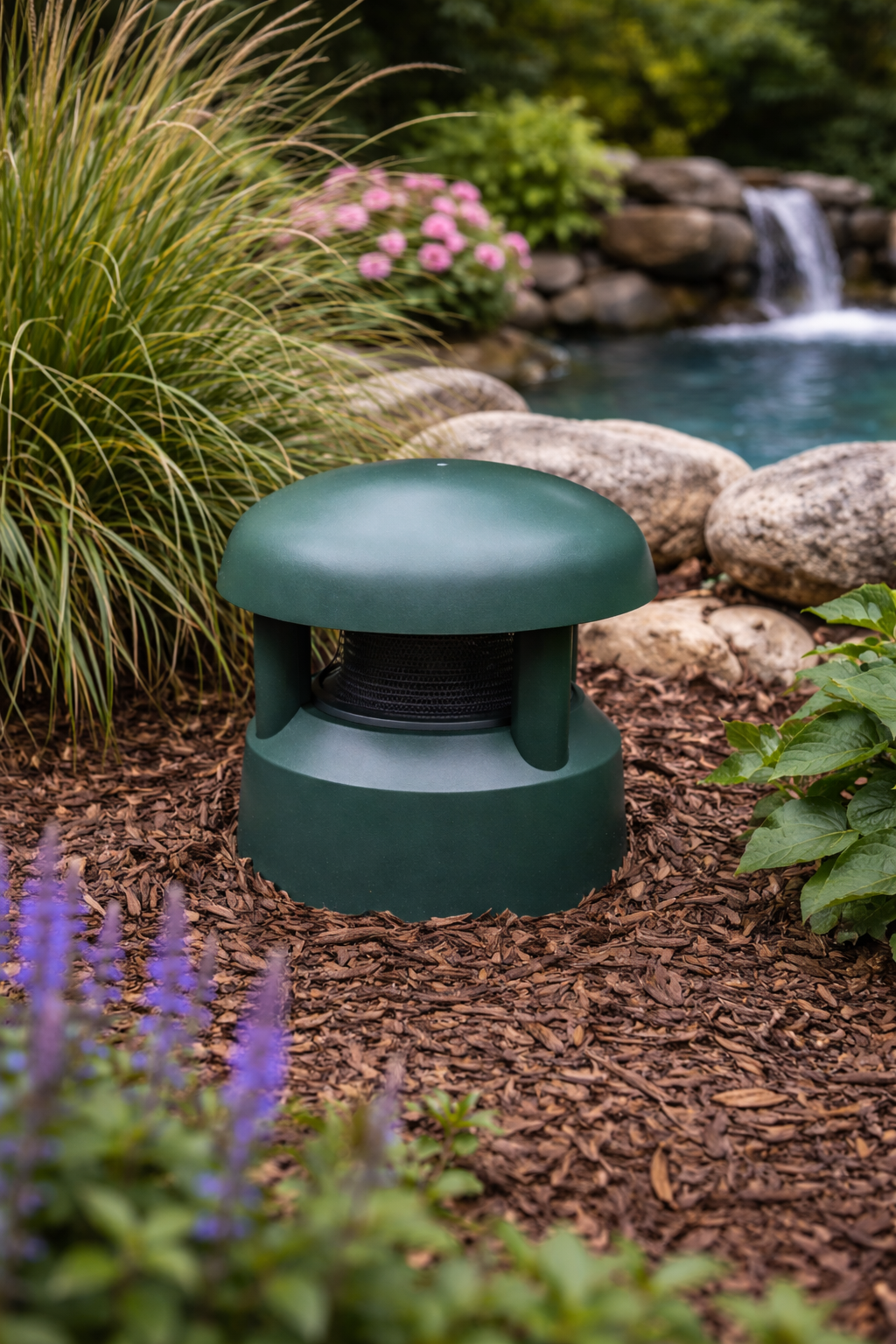
If you love a clean, modern look, you might prefer speakers integrated into architectural elements or placed discreetly along edges. If your yard is lush and layered, landscape style speakers can hide beautifully among shrubs and ornamental grasses.
Common outdoor speaker approaches
Landscape speakers are often placed in planting beds and aimed toward seating and activity areas. They are a favorite for patios and gardens because they are easy to blend and easy to expand over time.
Hardscape integrated speakers can be built into walls or under capstones so the sound feels like it is coming from the space itself. This is a great choice for outdoor kitchens, seat walls, and raised planters.
Subtle low end support can be added when you want music to feel full and rich outdoors. The goal is not to shake the neighbors windows. It is to add warmth so the sound feels balanced and satisfying at comfortable volume levels.
Plan for Sound in the Pool Area Thoughtfully
Pool spaces have their own rhythm. People move around. Kids splash and play. Adults lounge on chairs, float, and gather on steps. Designing sound for a pool means thinking about coverage across multiple micro areas, not just one seating spot.
A common mistake is to aim everything at the pool from one side. That often creates a loud area near the speakers and a dead zone on the far end. A better approach is to distribute sound along the perimeter so the experience feels even wherever you land.
Pool focused design tips
Place speakers so loungers, tanning shelves, and conversation areas all get gentle coverage. Aim sound toward the pool deck and seating rather than across open water. And consider how wind moves through your yard, since breezy afternoons can change what you hear.
Think About Materials, Surfaces, and the Shape of Your Yard
Every outdoor space has its own acoustics. Hard surfaces like stone, stucco, and concrete can reflect sound. Softer elements like planting beds, grass, and trees can help absorb and diffuse it. Neither is good or bad, it just affects how your system should be placed.
If your patio is surrounded by walls or a covered structure, sound may feel more contained and you may need fewer speakers than you think. If your yard is wide open, sound will dissipate faster, and you may benefit from more evenly spaced speakers.
Practical ways to work with your space
On a quiet day, stand in your main outdoor areas and clap once. Notice if the sound feels sharp and reflective or soft and muted. Reflective spaces often benefit from lower volume and careful aiming. Open spaces often benefit from added coverage so you do not have to push the system.
Keep Controls Simple So You Actually Use the System
The best outdoor sound system is the one you turn on without thinking. That means the user experience matters. If it takes five steps and a troubleshooting session, you will stop using it, and that is the opposite of what we want for your outdoor lifestyle.
Most homeowners love being able to control music from their phone, set favorite playlists, and adjust volume by zone. Simple, reliable control turns outdoor audio into an everyday pleasure, not a special occasion project.
Make it easy for the whole family
Consider creating a few go to settings like “Dinner,” “Pool Day,” and “Evening Wind Down.” When everyone can tap one option and the sound feels right, you get more spontaneous moments outside. Those are the moments that build connection over time.
Be Neighbor Minded Without Sacrificing Joy
Outdoor sound should feel generous inside your property and subtle beyond it. With good design, you can absolutely enjoy full, rich music without sending it down the street.
The trick is controlled coverage. More speakers at lower volume usually keeps sound where you want it. Placement matters too. Aim speakers inward, use landscaping as a natural buffer, and avoid blasting from elevated spots that project farther than you realize.
A quick courtesy check
Play music at your typical listening volume and walk to your property line. If you can clearly make out lyrics, you may want to adjust aiming, redistribute coverage, or lower volume slightly. Your future self will appreciate the peace and the good relationships.
Hide the Hardware So the Landscape Stays Beautiful
Outdoor spaces are visual, and audio should support the design rather than compete with it. Fortunately, thoughtful planning can keep equipment discreet. Speakers can nestle into planting beds. Wiring can be routed cleanly and safely. And central components can be tucked into an appropriate location so they are protected and out of sight.
When you do notice the system, it should feel intentional. Clean lines. Coordinated finishes. A placement that looks like it belongs. This is where a design minded approach really shines, because you can protect the beauty of your landscape while still getting great sound.
Small design details that matter
Match speaker finishes to nearby materials when possible. Use planting to soften views without blocking sound. And leave room for landscape maintenance, because a speaker hidden too deeply in a shrub can become frustrating over time.
Build for Real Life: Weather, Maintenance, and Growth
Outdoor systems live outdoors, which means sun, rain, sprinklers, and seasonal changes all play a role. A good plan accounts for that from the beginning so your system keeps performing beautifully year after year.
It also helps to think ahead. Many families start with one main zone and later expand to the pool, the fire pit, or a new pergola. If you design with growth in mind, adding later can feel seamless instead of disruptive.
Future friendly planning steps
Choose a layout that can be expanded. Leave pathways for wiring when patios or planting beds are being built. And make sure your equipment location is accessible enough for occasional checkups and seasonal adjustments.
A Simple Step by Step Plan for Outdoor Audio That Feels Amazing
If you are not sure where to begin, here is a straightforward process that works well for most homeowners. It keeps the focus on lifestyle first and details second, which is the best recipe for an outdoor space that truly gets used.
Step 1: Identify your top listening moments
Think about when you want music outside and what you want it to feel like. Calm background. Energetic gatherings. A little of both.
Step 2: Sketch your outdoor rooms
Mark dining, lounging, pool, fire pit, and pathways. Even a quick hand sketch helps you visualize zones and coverage.
Step 3: Decide where sound should be strongest
Most people want the best audio where they spend the most time. That is often the patio and lounge areas, with lighter coverage elsewhere.
Step 4: Plan speaker placement for even coverage
Think in layers. Several smaller speakers placed closer to the listening areas usually sound better than one or two loud points.
Step 5: Keep control simple
Make sure it is easy to turn on, adjust, and enjoy. The easier it is, the more it becomes part of everyday life.
Outdoor Sound That Supports Connection
At the end of the day, an outdoor sound system is not about equipment. It is about atmosphere. It is about the way music can make a Tuesday dinner feel special, or how a familiar playlist can turn a pool afternoon into a family tradition. It is about creating a backyard that invites people to stay awhile.
If you want help designing outdoor audio that blends into your landscape and brings your spaces to life, Aqua 4 Outdoor is here to guide you. With the right plan, your yard can feel like an extension of your home, ready for slow mornings, lively celebrations, and everything in between.
No responses yet