

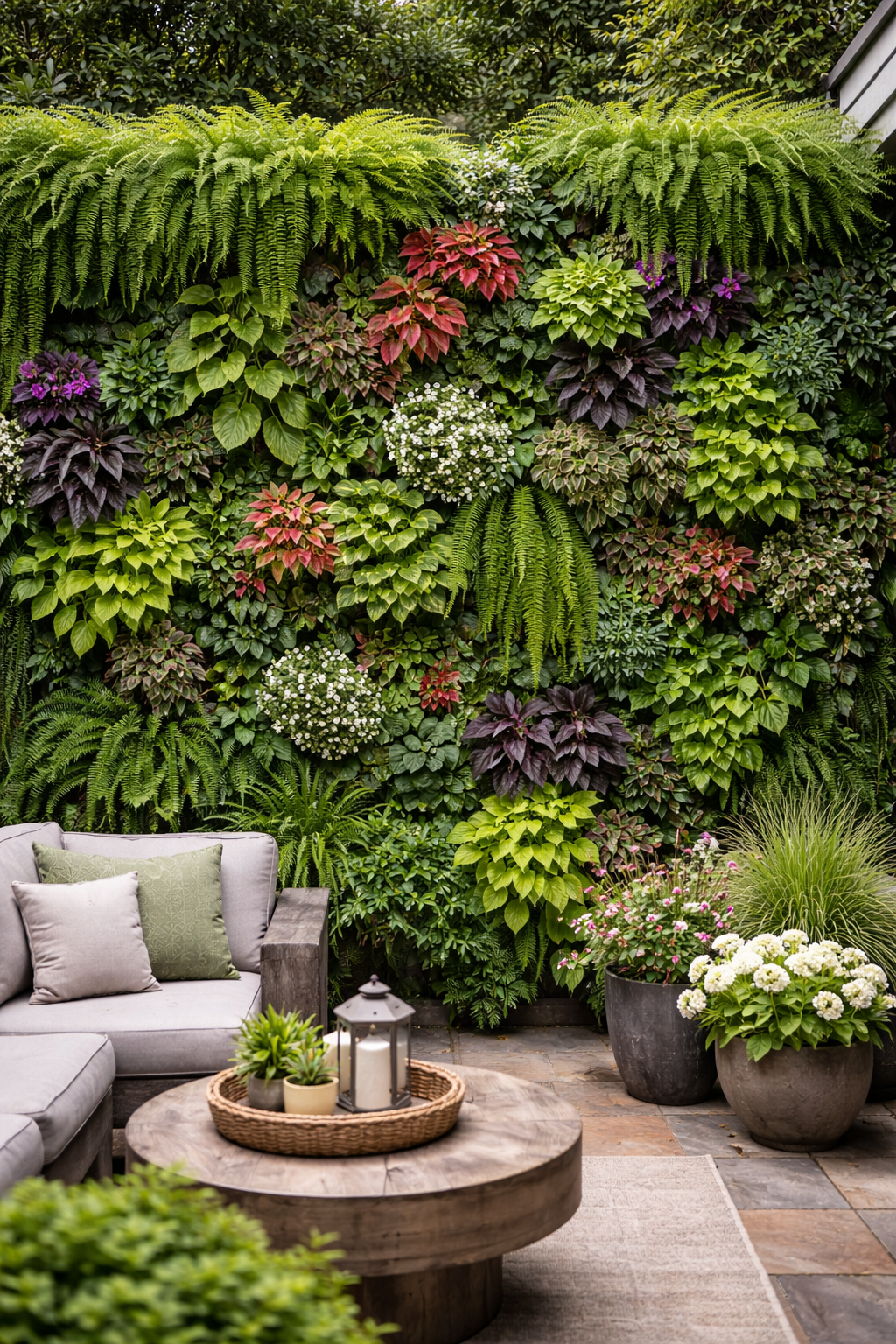
How vertical gardens and biophilic walls are transforming modern spaces
Living walls have quickly become one of the most powerful ways to bring nature into our homes, workplaces, and outdoor spaces. Also called vertical gardens or biophilic walls, these lush, plant-filled installations create an instant visual impact while delivering meaningful health, environmental, and lifestyle benefits.
Once seen only in high-end hotels or luxury offices, living wall design is now widely used in residential patios, poolside courtyards, kitchens, bathrooms, offices, restaurants, and even apartment balconies. Thanks to advances in irrigation, lightweight systems, and plant technology, these green walls are now easier to maintain and more accessible than ever.
In this guide, we’ll explore how living wall systems work, how they’re built, the differences between system types, how they’re irrigated, and why biophilic walls are so popular in modern design.
What Is Living Wall Design?
Living wall design refers to the planning and installation of vertical surfaces covered with living plants. Unlike potted plants or hanging baskets, these walls use integrated systems that allow dozens or even hundreds of plants to grow vertically while sharing irrigation, drainage, and nutrients.
A vertical garden can be as simple as a small herb wall on a patio or as dramatic as a two-story indoor jungle. A biophilic wall takes this a step further by intentionally designing the plant selection, placement, and layout to support human wellness, stress reduction, and a deeper connection to nature.
These walls aren’t just decorative — they are functional ecosystems that clean the air, cool the space, reduce noise, and make people feel better in the environments they occupy.
Why Living Walls Are So Popular
The popularity of living wall design is tied to several powerful trends.
First, people are craving more connection to nature. As our lives become more digital and indoor-focused, biophilic design — the idea that humans thrive when surrounded by natural elements — has gained major traction. Vertical gardens allow people to experience greenery even when outdoor space is limited.
Second, modern architecture often favors clean lines, hard materials, and minimal ornamentation. A biophilic wall adds warmth, texture, and life without cluttering the space.
Third, sustainability matters more than ever. Living walls help regulate temperature, improve air quality, and reduce the need for artificial climate control in many environments.
Together, these factors have made vertical gardens a defining feature of modern residential and commercial design.
Health & Wellness Benefits of Biophilic Walls
One of the most compelling reasons to incorporate living wall design is how it affects human health.
Research has shown that exposure to plants and greenery can:
- Reduce stress and anxiety
- Lower blood pressure
- Improve mood
- Increase productivity
- Improve concentration
- Reduce fatigue
A biophilic wall brings these benefits indoors, especially in environments like offices, medical spaces, gyms, and homes where people spend many hours each day.
Living walls also help clean the air. Plants naturally absorb carbon dioxide and certain airborne pollutants while releasing oxygen and humidity, creating a healthier breathing environment.
In outdoor spaces, vertical gardens can also reduce noise and improve privacy while making areas feel cooler and more inviting.
Where Living Walls Are Used
Modern living wall design can be adapted to nearly any environment.
Common applications include:
- Outdoor patios and courtyards
- Poolside feature walls
- Balcony gardens
- Entryways and foyers
- Office lobbies
- Restaurants and cafes
- Bathrooms and spas
- Kitchens and dining areas
A vertical garden allows you to add greenery without sacrificing valuable floor space, making it ideal for both large and compact settings.
Living Wall System Types
Not all living walls are built the same. There are three main system categories, each with its own advantages.
Modular Living Wall Systems
Modular systems use pre-built panels or trays that hold individual plants. These panels mount to a frame attached to the wall.
Pros
- Easy to install and replace
- Highly customizable
- Works indoors and outdoors
- Great plant flexibility
Cons
- Slightly higher upfront cost
- Visible seams if not designed well
Modular systems are extremely popular in residential living wall design because they are reliable, adaptable, and easy to maintain.
Felt Pocket Systems
These systems use layers of fabric or felt pockets where plants are inserted.
Pros
- Lightweight
- Lower cost
- Flexible layouts
Cons
- Shorter lifespan
- Can dry out unevenly
- Less structural support
Felt systems work best for indoor vertical gardens where irrigation and humidity can be carefully controlled.
Hydroponic Living Walls
Hydroponic systems grow plants without soil. Instead, roots sit in a nutrient-rich water solution.
Pros
- Very clean
- Fast plant growth
- Lightweight
- Precise nutrient control
Cons
- Requires technical knowledge
- Pumps and filtration must be maintained
- Higher initial complexity
Hydroponic biophilic walls are common in commercial spaces and high-end architectural projects.
Irrigation: How Living Walls Stay Alive
One of the biggest concerns people have about vertical gardens is watering. Modern systems solve this with automated irrigation.
Most living wall designs use:
- Drip irrigation lines
- Timers or smart controllers
- Built-in drainage trays
Water is delivered at the top of the wall and flows downward through the plant roots, with excess captured and drained away. This keeps plants consistently hydrated without waste.
Indoor biophilic walls often include recirculating systems that reuse water, making them highly efficient.
Plant Selection for Living Walls
Choosing the right plants is critical to a successful living wall design.
Outdoor vertical gardens typically use:
- Ferns
- Philodendrons
- Grasses
- Vines
- Tropical foliage
- Flowering accents
Indoor biophilic walls often feature:
- Pothos
- Peace lilies
- Snake plants
- Philodendrons
- Moss walls
- Low-light tolerant species
Plants are selected based on:
- Light levels
- Humidity
- Climate
- Maintenance level
- Desired visual style
A well-designed vertical garden looks lush while remaining easy to care for.
Maintenance: What Living Walls Really Need
While living walls are easier than many people expect, they do require regular care.
Typical maintenance includes:
- Checking irrigation lines
- Trimming and pruning
- Replacing plants
- Fertilizing
- Monitoring pests
- Cleaning filters and drains
Outdoor living walls may need seasonal adjustments, while indoor biophilic walls require consistent lighting and nutrient management.
Most professionally designed systems can be maintained in under an hour per month once established.
How Long Do Living Walls Last?
With proper design and maintenance, living wall systems can last 10–20 years or more. Individual plants may be replaced over time, but the structure and irrigation system remain intact.
This makes vertical gardens a long-term investment in beauty, wellness, and property value.
Living Walls in Modern Architecture
Living wall design is now a core feature of modern architecture. Designers use vertical gardens to soften large buildings, create focal points, and connect people to nature.
Biophilic walls are especially popular in:
- Wellness spaces
- Luxury homes
- Hotels and resorts
- Workplaces
They bring emotional warmth to even the most contemporary settings.
Final Thoughts
Living wall design is far more than a trend — it’s a powerful way to bring life, beauty, and wellness into our built environments. Whether you call it a vertical garden or a biophilic wall, the effect is the same: spaces feel more alive, more peaceful, and more connected to nature.
With modern systems, smart irrigation, and thoughtful plant selection, living walls are easier to maintain and more impactful than ever. From outdoor courtyards to indoor sanctuaries, they transform walls into living works of art — creating environments that don’t just look beautiful, but feel better to be in.
Comments are closed