

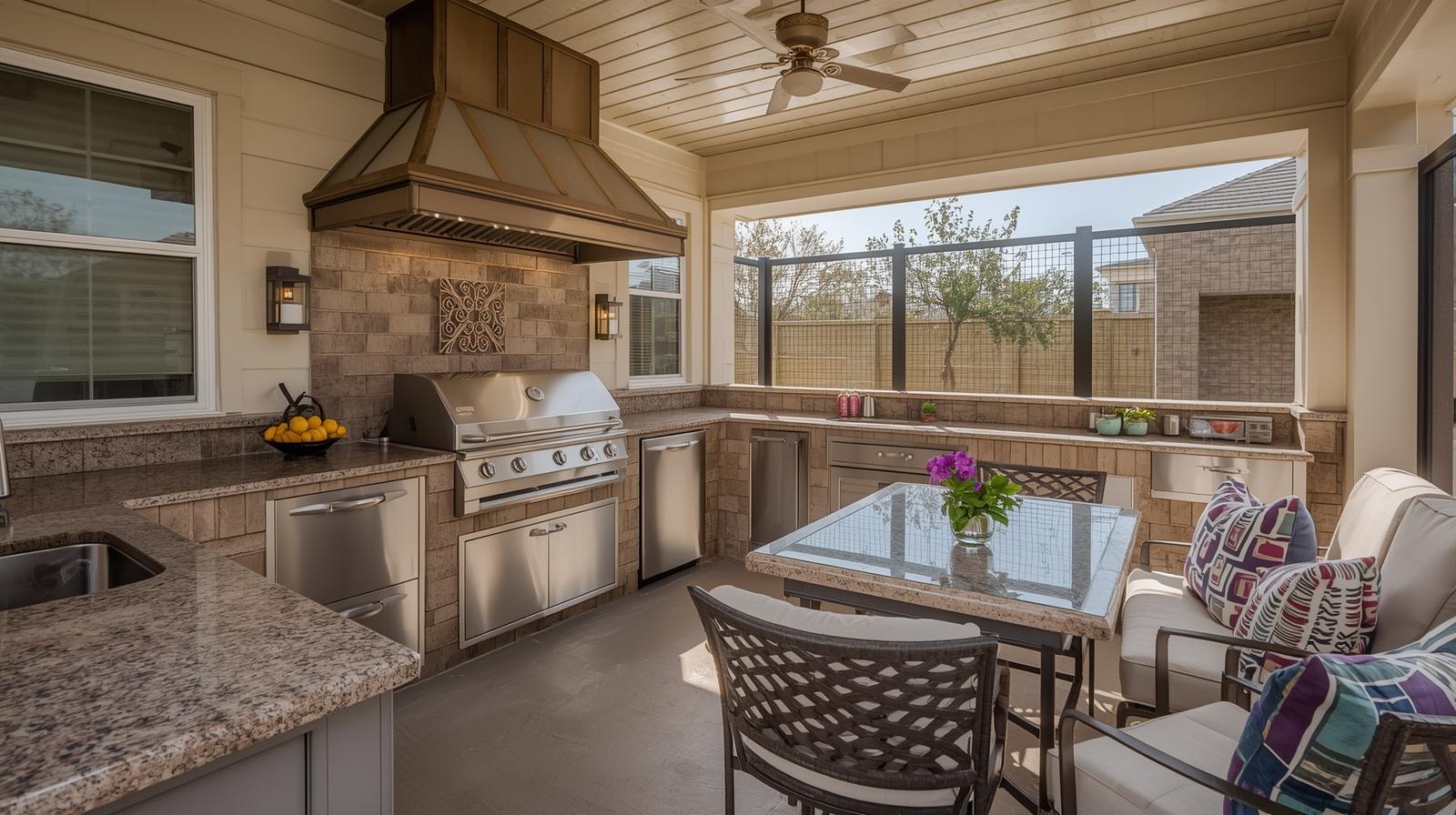
There’s something special about cooking outside. The air feels lighter, conversation stretches a little longer, and the kitchen becomes less of a “room” and more of a gathering place. When an outdoor kitchen is planned well, it doesn’t just add convenience—it changes how you use your backyard. Weeknight dinners happen outdoors. Friends linger while you prep. Kids snack at the counter and tell you about their day.
At Aqua 4 Outdoor, we love designing outdoor kitchens that feel like a true extension of indoor living: beautiful, functional, and welcoming. In this post, we’ll walk through the appliance must-haves (and what’s optional), plus layout tips that help everything flow—so hosting feels joyful instead of chaotic.
Start with how you actually live (not a showroom checklist)
Before we talk appliances, let’s talk lifestyle—because the “best” outdoor kitchen is the one that fits your rhythm. Some homeowners love to grill and keep things simple. Others want a full outdoor entertaining hub with beverages, prep space, and a pizza night setup.
Try this quick thought exercise:
Picture your most common outdoor moment. Is it a quiet family dinner on a Tuesday? A Saturday pool day with snacks and drinks? Holiday gatherings where everyone wants to help?
Then ask yourself:
- How many people do you usually host—4, 8, 20?
- Do you want to cook full meals outside, or just finish and serve?
- Will kids be part of the flow (snacks, drinks, washing hands)?
- Do you want guests sitting at the kitchen, or nearby in a lounge/dining area?
Once you’re clear on that, choosing appliances and planning the layout becomes much easier—and you’ll avoid paying for features you won’t use.
Outdoor kitchen appliance must-haves (the essentials)
Think of these as the core pieces that support real cooking and easy hosting. You can absolutely build bigger from here, but these are the workhorses.
1) The grill (your anchor appliance)
The grill is typically the heart of the outdoor kitchen, and it influences everything around it—clearances, ventilation, heat-safe materials, and how much landing space you’ll need.
Practical tips:
- Size it to your real life. A huge grill sounds exciting, but if you mostly cook for four, a more modest size often feels easier day-to-day.
- Plan landing space on both sides. You’ll want room for trays, tools, and a “safe spot” for hot items.
- Think about what you love to cook. If you do a lot of low-and-slow, you might prioritize a grill that handles steady heat well, or plan space for a dedicated smoker later.
Example: If your family loves simple weeknight grilling—chicken, veggies, burgers—build the kitchen around a quality grill, generous prep space, and a small fridge. That setup will get used constantly.
2) A refrigerator (the unsung hero of convenience)
An outdoor-rated refrigerator keeps the flow outside. No more running in and out for marinades, drinks, condiments, or the tray of skewers you forgot on the counter.
Practical tips:
- Place it where it serves guests, not just the cook. If friends can grab a drink without standing in your cooking zone, everyone feels more relaxed.
- Consider two cold zones. In larger layouts, a beverage fridge near seating and a prep fridge near the grill can be a game-changer.
- Leave breathing room. Outdoor fridges need proper ventilation to perform well—your contractor/designer will help plan this correctly.
3) A sink (small footprint, big payoff)
If there’s one feature that makes an outdoor kitchen feel “complete,” it’s a sink. It makes food prep easier, helps with cleanup, and encourages everyone to stay outside longer.
Practical tips:
- Choose function first. A simple sink with a good faucet goes a long way—especially for rinsing produce, washing hands, and quick tool cleanup.
- Add a pull-down faucet if you can. It’s one of those small upgrades you’ll appreciate every single weekend.
- Think about a trash pull-out nearby. Sink + trash close together keeps prep tidy and prevents little messes from spreading.
Example: For families, a sink near the outer edge of the kitchen can double as a “kid-friendly” handwashing station after pool time or gardening.
4) Adequate counter space (the difference between stress and ease)
In real life, counter space is what makes cooking outside feel smooth. It’s where you season, assemble, plate, set down tongs, and lay out serving boards when guests arrive.
A good rule of thumb: Plan for at least one generous prep zone (not interrupted by appliances) plus some landing space near the grill.
Practical tips:
- Keep one “clean” stretch. Try to reserve a section that stays relatively clear for plating and serving.
- Remember corners. Corner counter space is often underused unless it’s designed intentionally—great for decor, a beverage station, or a built-in herb planter nearby.
Nice-to-have appliances (choose based on your hosting style)
These upgrades can be amazing—but they’re most satisfying when they match how you entertain. The goal is not “more stuff.” The goal is a kitchen that supports the moments you want to have.
Side burners or power burners
If you want to cook complete meals outside—sautéing veggies, warming sauces, boiling corn—an extra burner is a smart addition.
Great for: pasta night outdoors, seafood boils, warming BBQ sauce, or keeping a pot of chili going during a game-day gathering.
Pizza oven
A pizza oven turns dinner into an experience. It’s interactive, fun for guests, and perfect for family traditions (Friday pizza night under string lights is hard to beat).
Layout tip: Give it its own prep zone for dough stretching and toppings, plus a heat-safe landing spot for finished pizzas.
Smoker or ceramic grill (Kamado-style)
If you love brisket, ribs, or experimenting with smoke flavors, a smoker can be a great complement to your main grill.
Design tip: Smokers often benefit from a little extra clearance and a spot that doesn’t interfere with the main cooking flow.
Warming drawer or heat lamp area
When you host, timing is everything. A warming option helps you keep food ready while you grill in batches, or while kids run in and out and dinner gets delayed (it happens!).
Ice maker or dedicated beverage center
If you entertain often—or you have a pool—ice becomes the quiet MVP. A beverage center can also include storage for glasses, a small sink, or a spot for mocktail and cocktail ingredients.
Hosting tip: Put the beverage zone just outside the main cooking area so guests can help themselves without crowding you.
Layout tips that make an outdoor kitchen feel effortless
Appliances matter, but layout is what makes the whole space feel natural. A great layout protects your cooking zone, invites connection, and keeps people moving comfortably.
Think in “zones” (prep, cook, serve, socialize)
Outdoor kitchens work best when each activity has a home:
- Prep zone: counter space near the sink and fridge
- Cook zone: grill (and side burner if you have one)
- Serve zone: a clear counter for plating, serving boards, and drinks
- Social zone: seating that faces the cook and feels connected, not cramped
Practical example: If you love hosting, you might build a serving counter that faces the dining area. Guests can chat while you plate, and kids can grab food without weaving through hot zones.
Protect the “chef lane” (give the cook room to move)
One of the biggest outdoor kitchen mistakes is placing seating too close to the grill. It seems friendly, but it can become stressful—especially with kids, pets, and multiple people trying to help.
Tip: Allow enough clearance behind the cook so you can open doors, turn with trays, and move safely. If you’re planning bar seating, aim for a comfortable buffer so stools don’t spill into the cooking path.
Choose a layout shape that fits your yard and your gatherings
There’s no one “perfect” shape—just the one that fits your space and your lifestyle.
L-shaped kitchens: the all-around favorite
L-shapes are popular because they create natural zones and give you plenty of counter space without feeling massive.
Works well when: you want a dedicated prep area and a separate serving area, and you like the cook to feel connected to guests.
Galley or straight-line kitchens: clean and compact
A straight run can be incredibly efficient, especially for smaller patios or when you want the kitchen to sit neatly along a wall or edge.
Works well when: your yard is narrow, or you want to preserve open space for dining and lounging.
U-shaped kitchens: best for serious outdoor cooks
U-shapes offer lots of counter space and storage, and they create a defined “room” outdoors.
Works well when: you cook often, host frequently, and have enough space to keep the area from feeling enclosed.
Island kitchens: the social centerpiece
An island can be stunning—especially when you want the kitchen to be the focal point. The key is ensuring it doesn’t block the flow between the house, the dining area, and the rest of the yard.
Works well when: you want guests gathered around, and you have enough circulation space on all sides.
Place the kitchen where it makes life easier
It’s tempting to tuck an outdoor kitchen into a far corner because it looks nice on paper—but in real life, the best location is the one that feels effortless from the house.
Keep it close enough to feel connected
If your outdoor kitchen is too far from the indoor kitchen, you’ll spend a lot of time carrying things back and forth. Even with a great outdoor fridge, you’ll still occasionally need utensils, platters, or pantry items.
Friendly rule: If you can comfortably carry a tray of food out with one trip, you’re in a good range.
Plan for weather and comfort
Sun, wind, and rain affect how often you’ll use your kitchen. A beautiful setup that’s uncomfortable in July heat (or constantly windy) won’t get the love it deserves.
Tips that help:
- Consider partial cover like a pergola or roof extension to provide shade and light rain protection.
- Think about where smoke will go—especially if you have close neighbors or windows nearby.
- Add task lighting so cooking after sunset feels cozy, not difficult.
Don’t forget storage: the secret to a calm, uncluttered look
Storage is what keeps your outdoor kitchen feeling like a true “room,” not a temporary setup. When tools and supplies have a home, your counters stay clear—and the space looks beautiful even when you’re not hosting.
What’s worth storing outdoors?
If your climate allows and you use outdoor-rated cabinetry, you can store:
- Grilling tools, gloves, and thermometer
- Foil, trays, and skewers
- Plates and serving boards (if you have protected storage)
- Outdoor-friendly cups and drinkware
Design tip: A dedicated drawer near the grill for tools is a small detail that makes cooking feel effortless.
Materials and finishes: make it beautiful, then make it easy to live with
An outdoor kitchen should feel cohesive with your home and landscape. At the same time, it needs to handle sun, moisture, spills, and lots of use.
Countertops that hold up (and still look high-end)
Look for surfaces that are durable and easy to clean. The right countertop will keep your kitchen looking polished with minimal fuss—so you can enjoy the space instead of worrying about it.
Friendly tip: Choose a finish and color that won’t show every crumb or water spot. Outdoor living is meant to be lived in.
Backsplash and vertical surfaces
A simple backsplash or wall detail can elevate the whole kitchen and help tie in nearby features like a fire pit, pool, or patio finishes.
Example: If your home has warm stone or brick tones, repeating that color family in the outdoor kitchen creates an intentional, “always belonged here” look.
Comfort details that make people linger
The best outdoor kitchens don’t just function—they invite people to stay. A few thoughtful touches can turn a quick meal into a full evening of conversation.
Seating that supports connection
Bar seating is great, but it’s even better when it’s paired with nearby lounge seating or a dining table so everyone can find their favorite spot.
Tip: Angle seating so people face each other (and the cook). It’s a subtle shift that makes the space feel more social.
Lighting that feels warm and welcoming
Layered lighting makes outdoor kitchens feel magical after sunset. Think practical task lighting at the grill, plus softer ambient lighting nearby.
Example: Warm downlighting under a pergola paired with subtle toe-kick lighting at the base of the island can make the whole space feel elevated—without feeling harsh.
Little “memory makers”
This is our favorite part. Build in features that support the moments you want:
- A ledge for lemonade and snacks during pool days
- A serving counter for taco night toppings
- A dedicated spot for a portable speaker and a candle lantern
- A nearby herb planter so kids can pick basil for pizza night
These details are small, but they’re often what turns an outdoor kitchen into a tradition.
A simple planning process (so you feel confident)
If you’re in the early stages, here’s a straightforward way to move from ideas to a plan you’ll love.
Step 1: List your “non-negotiables”
Choose the top three things you’ll use weekly. For many families, that’s a grill, a fridge, and enough counter space to prep and serve.
Step 2: Sketch your zones
Even a simple sketch helps. Mark where prep happens, where cooking happens, and where guests will naturally gather.
Step 3: Walk the path from the house
Stand at your back door and imagine carrying a tray, a bag of groceries, or a pitcher of drinks. Where would you set it down first? That’s often where your landing counter should be.
Step 4: Decide what you want to feel
Do you want “resort relaxed,” “modern entertaining,” or “cozy family retreat”? That feeling will guide finishes, lighting, and the overall design language.
Step 5: Plan for growth
If budget or timing means you’re building in phases, that’s okay. You can design the layout now so future upgrades (like a pizza oven or beverage center) fit seamlessly later.
Final thoughts: design for ease, and the memories will follow
A well-designed outdoor kitchen isn’t about having every appliance—it’s about creating a space where cooking feels fun, hosting feels natural, and family time stretches a little longer under the open sky.
If you’re dreaming about an outdoor kitchen that fits your home and your life, we’d love to help you think through the layout, the must-haves, and the details that make it feel uniquely yours. The goal is simple: bring everyone together, outside.
No responses yet