

At Aqua 4 Outdoor, we believe the best outdoor spaces do two things at once: they look amazing and they make life better. Morning coffee in the sun. Kids chasing bubbles on the lawn. Friends lingering by the fire pit long after dinner ends.
The good news? Designing an eco-friendly outdoor space doesn’t mean giving up comfort or curb appeal. It means making thoughtful choices, about water, materials, plants, and how you use your yard, so your space feels like a natural extension of your home while working with nature instead of against it.
Below are our favorite eco-friendly outdoor design practices, shared the same way we’d share them with a friend: warm, practical, and focused on what will actually make your backyard easier to enjoy.
Start With a “How Do We Want to Live Out Here?” Plan
The most sustainable outdoor design choice is the one you won’t have to redo in two years. A clear plan helps you avoid wasted materials, impulse purchases, and layouts that don’t fit your real life.
Before picking pavers or plants, take a quick inventory of your routines:
Ask yourselves: Where do we naturally gather? Do we eat outside often? Do the kids need an open run-around zone? Do we want shade in the afternoon? Do we want quiet time, party time, or both?
Then walk your yard like a designer would. Notice the sunny spots, windy corners, soggy areas, and views you love (or want to hide). This simple step often reveals that the best patio location isn’t where the previous owner had one, or where you assumed it should go.
A simple example
If your kitchen is at the back of the house, placing a dining patio close to the door reduces the “in-and-out” trek (and the temptation to add extra hardscape later). Then you can create a second, smaller lounge area farther out, maybe under a tree or pergola, where it feels like a mini escape.
Design for Water-Wise Living (Without a “Desert Yard” Look)
Water is often the biggest ongoing “footprint” in a landscape. The goal isn’t to remove all greenery, it’s to choose the right plants, group them smartly, and use water efficiently so your yard stays lush where it counts.
1) Choose plants that make sense for your climate
Native and well-adapted plants typically need less water and less fuss once established. They also tend to support local pollinators, which brings that magical “alive” feeling to your yard, birds, butterflies, and all.
If you love a classic garden look, you can absolutely get it with climate-smart choices. Think: flowering shrubs, ornamental grasses, and perennials that return reliably every year.
2) Group plants by water needs
This one change can make your irrigation more effective immediately. Put thirstier plants together near the house or near a hose bib, and keep drought-tolerant plants in a separate zone. That way you’re not overwatering half the yard just to keep a few favorites happy.
3) Upgrade irrigation where it matters most
If you’re still using spray sprinklers everywhere, consider shifting beds to drip irrigation. Drip puts water at the root zone, which means less evaporation and less waste. If you’re not ready to overhaul everything, start with your planting beds and high-visibility areas.
A practical step: Add a smart controller or rain sensor so your system adjusts to weather changes automatically. Even small adjustments, like watering early morning instead of afternoon, help.
4) Mulch like a designer (and a water-saver)
Mulch is one of the simplest eco-friendly moves, and it also makes beds look finished and intentional. A 2–3 inch layer helps soil hold moisture, suppresses weeds, and protects roots during temperature swings.
Bonus: a fresh top-up of mulch in spring can make the whole yard feel “done” without buying a single new plant.
Use Permeable Surfaces to Reduce Runoff and Keep Your Yard Healthier
Traditional hardscapes can push rainwater away from your property quickly, sometimes too quickly, leading to runoff, puddling, and stressed plants.
Permeable solutions let water soak into the ground more naturally. They also tend to feel softer and more integrated with the landscape, which homeowners love once they see the finished look.
Eco-friendly hardscape options to consider
- Permeable pavers designed with gaps for drainage
- Gravel or decomposed granite paths for informal walkways
- Stepping stones with groundcover between them for a garden feel
- Porous concrete in select applications where a smoother surface is needed
Design tip: If you’re worried permeable options will look “rustic,” pairing them with clean edging, modern lighting, and crisp planting lines creates a polished, high-end finish.
Pick Materials That Last (and Age Beautifully)
Sustainable outdoor design isn’t only about what something is made of, it’s also about how long it will serve your family. A long-lasting patio, fence, or pergola you love for 15–20 years is often greener than a cheaper option you replace twice.
Look for these material upgrades
Reclaimed or recycled materials: Reclaimed wood, recycled composite decking, and salvaged stone can add character while reducing demand for new resources. The best part? These materials often bring a warmth you can’t fake.
Local stone and locally sourced materials: When available, local sourcing can reduce transport impact and tends to match the natural “language” of your region.
Durable finishes: Choose exterior-rated hardware, weather-resistant stains, and quality sealers where appropriate. You’ll spend less time repairing and more time enjoying.
A quick example
If you’re building a seating wall, a well-built stone or concrete-block wall with a comfortable cap can last for decades and doubles as extra seating for gatherings. It’s one of those choices that keeps paying you back, in function and in fewer future projects.
Design Shade and Cooling Into the Space (So You Use It More)
An eco-friendly yard that’s too hot to enjoy won’t get used, and then it’s tempting to renovate again, add structures later, or rely on energy-heavy cooling solutions indoors.
Instead, plan comfort into the layout from day one.
Smart ways to add shade
Plant a tree in the right place: A well-placed shade tree can cool a patio, protect outdoor furniture, and make the whole yard feel calmer. Think about how the sun moves across your yard, especially in late afternoon when it’s hottest.
Add a pergola or shade structure: Pergolas can be paired with shade sails, outdoor curtains, or climbing plants for a soft, resort-like feel.
Use layered planting: Shrubs and tall grasses can cool and soften sunny edges while also creating privacy, without needing a tall, solid fence everywhere.
Design tip
When a patio has shade, a gentle breeze path, and lighting, it becomes a true “outdoor room.” That’s when families start using it on random weeknights, not just for special occasions.
Support Pollinators and Wildlife (In a Way That Still Looks Designed)
Inviting life into your landscape is one of the most rewarding eco-friendly practices. When butterflies and birds show up, your yard feels like a little sanctuary, especially for kids, who notice everything.
You don’t need a wild meadow to do this. You just need a few intentional choices.
Easy, beautiful ways to help
Plant in layers: A mix of trees, shrubs, and perennials provides shelter and food sources across seasons.
Choose a longer bloom season: Include a few plants that bloom in spring, summer, and fall so pollinators have consistent resources.
Add a small water source: Even a simple birdbath or recirculating water feature brings in birds and creates that soothing “vacation at home” sound.
Skip harsh chemicals when possible: Healthy soil, good mulch, and right-plant-right-place choices reduce the need for heavy interventions.
Reduce Lawn Strategically (Keep the Fun, Lose the Fuss)
Lawns aren’t “bad,” but they can be high-maintenance and water-hungry depending on your region. The trick is to keep lawn where it adds value to your life, and replace it where it’s just extra work.
Where lawn makes sense
If your kids play soccer, your dog needs a run, or you love the look of a green open area, keep a dedicated lawn zone. A clean rectangle or soft oval lawn can look very intentional and design-forward.
Where you can shrink it
Side yards, narrow strips, awkward slopes, and unused corners are perfect candidates for lower-water planting beds, groundcovers, or gravel with stepping stones.
A family-friendly example
We often design a smaller “activity lawn” near the patio (so adults can supervise while relaxing) and convert the rest into planting beds, pathways, or a small nature zone, like a stepping-stone trail or a tucked-away hammock spot.
Choose Outdoor Lighting That’s Beautiful and Thoughtful
Lighting is one of the fastest ways to make an outdoor space feel welcoming, and one of the easiest places to be eco-conscious.
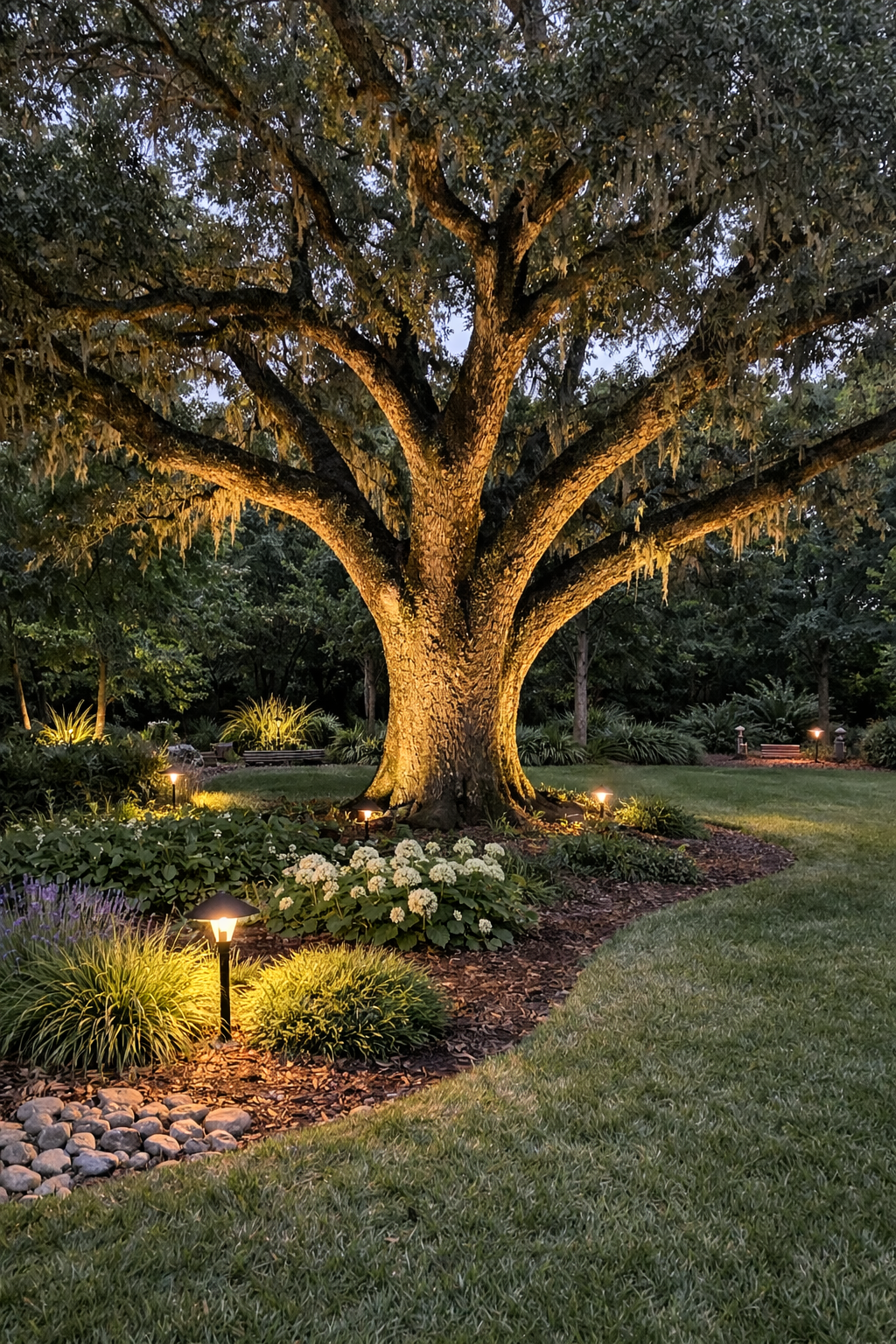
Use warm LED fixtures, keep light levels comfortable (not stadium-bright), and place lighting where it supports safety and ambiance: steps, pathways, and gathering areas.
Design tip
Instead of flooding the whole yard with light, highlight a few features: a favorite tree, a textured wall, or a garden bed. It feels more luxurious, and it uses less energy.
Create Outdoor “Rooms” That Encourage Connection
One of our favorite parts of outdoor design is watching how it changes the way families spend time together. When your yard has clear zones, just like your home does, people naturally settle in, relax, and stay longer.
Eco-friendly design can still be comfort-first
Consider these “rooms,” sized for your lifestyle:
- Dining area near the kitchen for easy meals and celebrations
- Lounge zone with comfortable seating and a coffee table (yes, a real one)
- Fire feature nook for s’mores, stories, and chilly evenings
- Kid-friendly corner with open space, a swing, or a stepping-stone path
Practical step: Measure your key furniture before committing to a patio size. A little planning prevents the “beautiful patio that doesn’t fit the table” problem, and avoids future tear-outs.
Build in Low-Waste Habits With Smart Infrastructure
Eco-friendly living gets easier when your space supports it. A few built-in features can quietly reduce waste week after week, without feeling like a “project.”
Simple additions that make a big impact
Composting corner: A discreet compost bin tucked behind a screen or shrubs keeps food scraps out of the trash and gives you rich soil over time.
Rain collection (where appropriate): A rain barrel can help with hand-watering planters and garden beds. Even if you start small, it’s a satisfying way to use what nature provides.
Durable storage: A weatherproof storage bench or shed helps outdoor cushions and tools last longer, reducing replacement cycles.
Plan for Maintenance You Can Actually Keep Up With
The most sustainable landscape is the one you can maintain without stress. When maintenance feels manageable, your yard stays healthy and you’re more likely to use it, more dinners outside, more barefoot afternoons, more memories.
Design for “easy mode”
Keep edges clean: Crisp borders between beds and lawn (or beds and gravel) make everything look intentional and are easier to mow and tidy.
Repeat plants: Using fewer varieties in larger groupings looks more designed and typically performs better than a “one of everything” approach.
Choose the right plant size: Planting a shrub that naturally fits the space reduces constant trimming.
Install pathways where you walk: If people cut through a bed, that’s not a discipline issue, it’s a design cue. Add stepping stones or a path and protect your plants.
A Practical Step-by-Step Path to an Eco-Friendly Yard (Without Overwhelm)
If you’re excited but not sure where to begin, here’s a realistic order of operations we often recommend:
Step 1: Observe and prioritize
Note sun patterns, drainage, and how you want to use the space. Choose your top two goals (for example: “a dining patio” and “less watering”).
Step 2: Start with the layout
Decide where patios, paths, lawn zones, and planting beds will go. Good layout first means fewer changes later.
Step 3: Tackle water and soil basics
Mulch, improve soil where needed, and plan irrigation updates for planting beds.
Step 4: Invest in long-term materials
Choose hardscape and structures that fit your style and will last, permeable options where possible.
Step 5: Plant for beauty and resilience
Use climate-smart plants, repeat them for a cohesive look, and aim for seasonal interest.
Step 6: Add finishing touches
Lighting, furniture, and a few “personality” details (planters, a water feature, a fire pit) make the space feel like home.
The Heart of Eco-Friendly Design: A Yard You’ll Truly Live In
Eco-friendly outdoor design isn’t about being perfect. It’s about choosing a path that’s lighter on resources and heavier on joy. A space where nature is welcomed, water is respected, materials are chosen with care, and comfort is designed in, so your family actually wants to be outside.
If you’re dreaming about an outdoor space that feels like an extension of your home, beautiful, functional, and ready for memory-making, Aqua 4 Outdoor is here to help you bring it to life in a way that feels good in every sense.
No responses yet