

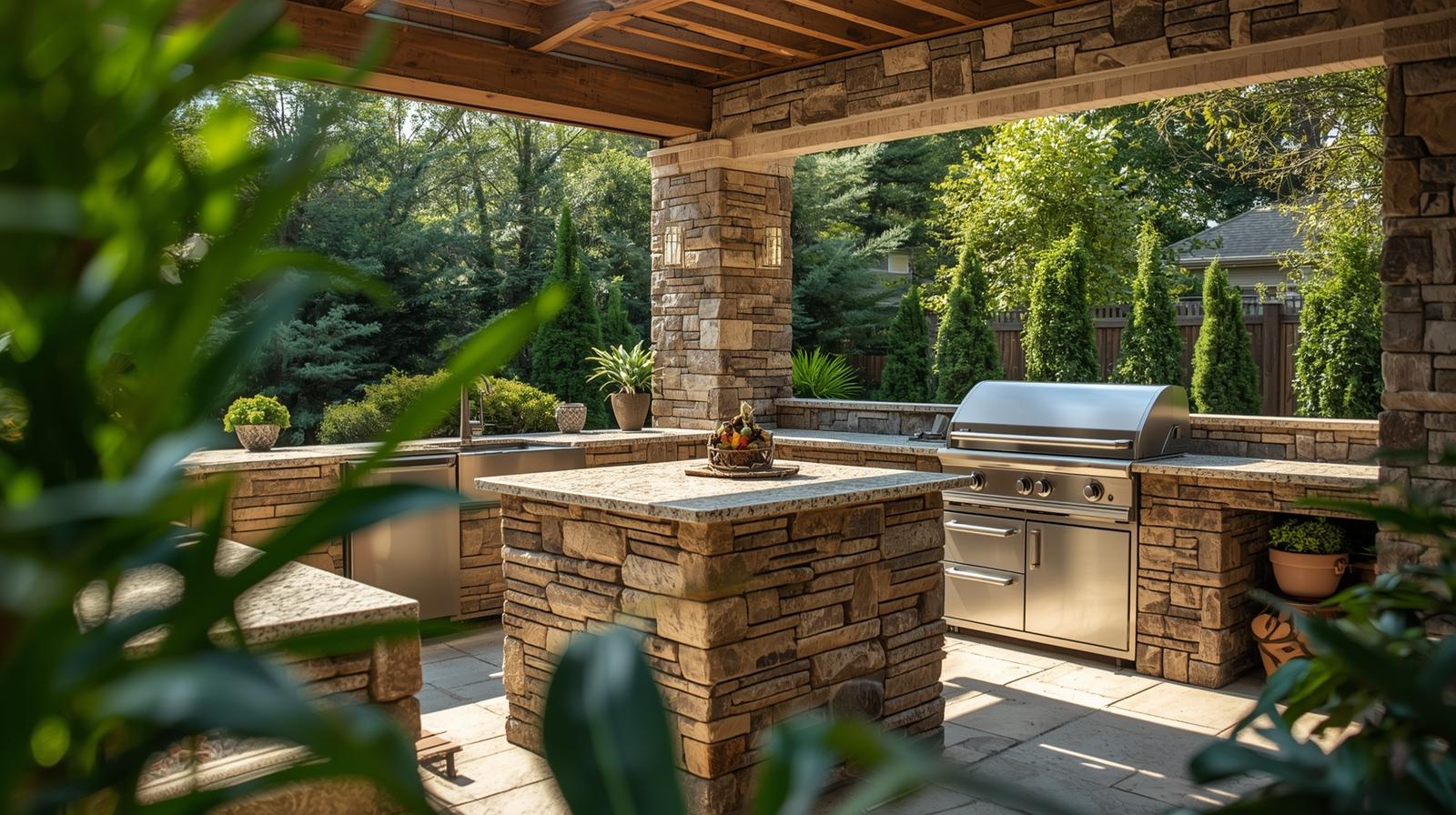
If you are planning a built-in grill, pizza oven, or full outdoor kitchen, understanding outdoor kitchen ventilation requirements is just as important as picking stone, cabinets, or appliances. Ventilation isn’t about luxury, it’s about safety, air quality, fire prevention, and code compliance.
This checklist walks you through everything you need to know in clear, easy-to-understand language including BTU calculations, hood sizing, clearance distances, grill island ventilation, and what local building departments typically look for.
Important note: Every municipality and building department has its own interpretation of code. Always verify your local outdoor kitchen ventilation requirements before beginning construction or purchasing appliances.
🔥 Why Outdoor Kitchen Ventilation Requirements Exist
Outdoor cooking produces:
- Heat
- Smoke
- Grease vapor
- Carbon monoxide
- Moisture
When cooking under a covered patio, pergola, lanai, or roof structure, that air must be removed properly or it can:
- Stain ceilings
- Trap smoke
- Trigger fire hazards
- Void appliance warranties
- Violate building codes
- Create unsafe breathing conditions
That’s why ventilation becomes mandatory when an outdoor kitchen is enclosed or partially enclosed.
🏗️ When Is Ventilation Required?
Ventilation is required when any of the following exist:
| Example | Vent Required? |
|---|---|
| Grill under a solid roof | Yes |
| Pergola with solid or louvered top | Yes |
| Lanai or screened enclosure | Yes |
| Three or more walls | Yes |
| Built-in grill against wall | Yes |
| Freestanding grill in open air | No (usually) |
Even outdoor kitchens that feel “open” often still fall under ventilation rules once walls, screens, or roofing are added.
📐 Outdoor Kitchen Clearance Requirements
These are general best-practice guidelines used by most manufacturers and inspectors:
Horizontal Clearances
- 12–24 inches from side walls
- 6–12 inches from backsplash or rear walls
- 36 inches minimum to combustible materials
Vertical Clearances
- 30–36 inches from grill cooking surface to hood
- 42 inches to combustible ceilings
- 48 inches recommended for wood ceilings
Always follow your grill manufacturer’s installation guide, as that overrides generic recommendations.
🔢 Understanding BTUs (Why They Matter)
BTU = British Thermal Unit.
It tells you how much heat your grill produces.
The higher the BTUs, the more powerful your ventilation system must be.
Typical Grill BTU Ranges
| Grill Size | Average BTUs |
|---|---|
| Small (24–30″) | 40,000 – 60,000 |
| Medium (36″) | 60,000 – 90,000 |
| Large (42–48″) | 90,000 – 150,000 |
| Luxury grills | 150,000+ |
🌬️ Hood CFM Calculation (Very Important)
CFM = Cubic Feet of Air Moved Per Minute
This determines how powerful your vent hood must be.
Standard Formula
100 CFM for every 10,000 BTUs
Example
A 90,000 BTU grill requires:
90,000 ÷ 10,000 = 9
9 × 100 = 900 CFM hood minimum
For safety and better smoke control, designers typically oversize by 10–25%.
Recommended hood: 1000–1200 CFM
🧱 Grill Island Ventilation Requirements
Built-in grills need two types of ventilation:
1. Exhaust Vent (Hood)
Pulls smoke, grease, and heat upward and out.
2. Island Air Vents
These allow gas to escape if a leak occurs.
Gas is heavier than air and without vents, it can pool inside the island and create an explosion hazard.
Typical Island Vent Rules
- One vent on each side of the island
- At least 10 square inches per vent
- Placed near the base of the cabinet
🔧 Hood Ducting Rules
If your hood vents outdoors (which it should), the duct must:
- Be metal (no flex duct)
- Have minimal bends
- Exit away from walls and soffits
- Include a backdraft damper
- Include grease collection
Poor ducting can reduce airflow by 30–50%.
🧯 Fire & Safety Code Considerations
Outdoor kitchen ventilation requirements are tied to:
- International Residential Code (IRC)
- International Mechanical Code (IMC)
- NFPA Fire Codes
- Local amendments
Inspectors commonly look for:
- Fire-rated hood liners
- Heat-rated wiring
- Gas shutoff access
- Proper vent clearances
- Manufacturer install sheets
Failing any of these can delay or fail inspections.
🧾 Final Checklist: Outdoor Kitchen Ventilation Requirements
✔ Hood sized to grill BTUs
✔ Minimum 900–1200 CFM for most built-ins
✔ Proper hood height (30–36″)
✔ Island gas vents installed
✔ Metal ducting to exterior
✔ Fire-safe clearances met
✔ Local code verified
✔ Manufacturer specs followed
📌 One Final Reminder
Outdoor kitchen ventilation requirements vary by city, county, and state. Some areas follow strict mechanical code rules, while others allow open-air exemptions. Always confirm requirements with your local building department before starting construction.
Comments are closed